| Overcoming Project Risks: Real Strategies for Real Results | ||
| Instructor: J.T. Moomau and Madecraft |  | |
| Released: 5/14/2024 | Course Details 1h General | |
| Skills Covered Project Management Project Risk | Course Link | |
| Professional Certifications and Continuing Education Units (CEUs) National Association of State Boards of Accountancy (NASBA) – 2.2 Project Management Institute (PMI) – PDUs – 1 | ||
What Could Go Wrong?
The reality
Effective project management practices reduce waste.
- You’re likely to experience a failed project, even if you’re doing everything right.
- Good project management does not guarantee success.
- A skilled project manager must accept risk and failure as a reality to be confronted.
Warning signs
- Project sponsor instability
- absence of sponsor or change of sponsor.
- Lack of stakeholder involvement
- Lack of buy-in
- A change in project value
- External factors outside of control
- Lack of pivoting
- Pivoting, shifting and adjusting to changes
- Respond and adapt!
Addressing issues
Warning Sign: Project Sponsor instability
Strategy: Carry the message up the ladder.
Warning Sign: Lack of Stakeholder involvement
Strategy: Leverage an effective sponsor.
Warning Sign: Lack of buy-in
Strategy: Use value as leverage.
Warning Sign: Change in Project Value.
Strategy: Realize the value quickly. Projects exist because they deliver value.
Warning Sign: Lack of pivoting
Strategy: Walk your team through the next valuable steps. It’s never too late to refocus.
Common sources of risk
Understanding why something happens is the first step to fixing it.
Source of Risk
- Lack of clarity
- Focus on defining project goals.
- Set actionable steps
- Create the definition of “done” – make it clear what exactly constitutes completion of your project.
- Roster shortfall
- Gap Analysis – naming the need from where you are to where you want to be
- Identify the skills you need.
- Review skills on the current roster.
- Show objectively what is needed.
- Gap Analysis – naming the need from where you are to where you want to be
- Bad change management
- Define the change
- Clarity who has authority
- Explain the integration
- A good project manage isn’t change adverse, but they are adverse to unstructured changes.
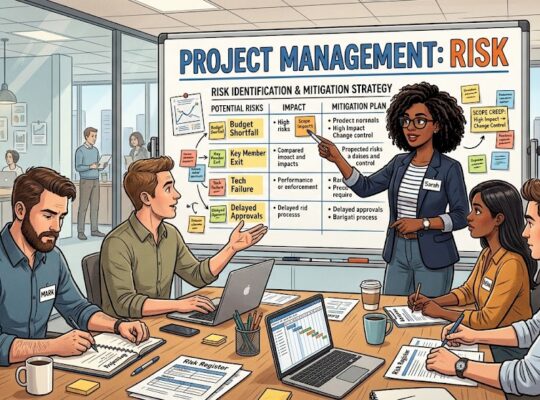
The risk register
A place to record the description, impact, and management options for individuals risks.
- Reduce – this strategy seeks to lessen the impact of a risk that comes to fruition.
- Avoid – this strategy seeks to side-step a risk entirely making sure it can’t happen.
- Transfer – this strategy moves the liability of a risk to another party.
- Accept – this strategy is knowing something might happen and letting it.
Realistic risk
- Likely Risk
- Reasonable chance of occurring.
- May affect scope of delivery.
- Realistically possible.
- Impactful Risk
- Affects risk management strategy
- Risk within your control
- Can be managed
Crisis Response
Fixing a failure
Issue
A risk that has become a reality.
Issue Resolution
An opportunity to positively reset the project.
- Name the issue – be specific when describing the problem.
- Classify the issue – tie it to similar issues.
- Control the issue – bring it within the needs of the project or work around it.
Taking over
R.E.A.D.I.N.G
- Review the history
- Ask about -> dates, methods, changes, scope creep
- Educate the stakeholders
- Embrace positive change
- Assess the project goals
- Identify the goals
- Determine how far off you are
- Decide actionable steps
- Demolish the project plan
- Develop an entirely new plan based on today
- Issue a revised plan
- Share your process with the team
- Next meeting
- Set expectations
- Establish goals
- Make assignments
- Opportunity to reset
- Get to work
- Target quick wins
- Take advantage of the low-hanging fruit
Making it right
- Value – talk to the team about lack of value beign generated in key areas.
- Focus – reorder the project to quickly start delivering value.
- Focus on the goals, not the actions. Never mistake being busy for being effective.
- Accountability – hold the team responsible for meeting the goals you’ve set.
Prevention Practices
Understanding value
Value is everything. What is the value in my project?
- Ensure all team members understand the meaning of “value”
- Clarify goals
- Objectifying the subjective – taking something that is open to interpretation and defining it to the point where it is understood how you intend it to be.
- Clearly define subjective words
- Set key performance indicators (KPIs)
- Done, Working, Functional – key words
- Objectifying the subjective – taking something that is open to interpretation and defining it to the point where it is understood how you intend it to be.
- Measure progress regularly and share the results with your team.
Communication is key
Effective communication practices prevent trouble later.
- Agree while it’s easy – know your escape plan before you are trapped
- How work will be organized and distributed
- How changes will be managed
- How meetings will take place and how to measure success in the project
- Keep it simple
- Use the most effective and simple measurements you can.
- Find the simplest way to communicate.
Looking back
Pro Tip: Do not overthink the goal
Prevent recurrence of problem issue. React within the scope of the project.
Pro Tip: Be on alert for negativity.
Manage risk by watching for trends
Hustle over hurry
Effort is the difference between being good, and being as good as you can be.
- Understand the context.
- Who’s involved
- What are the options
- Make a decision.
- Commit to your plan.
Case Studies at the Cinema
The indie movie
You’re limited by the reality of your circumstances.
- Evaluate what determines success.
- The people who drive value for determine what the value is.
- Adjust your vision to what the project needs to be.
- Focus on the goals of the projects not those of the project manager.
- Learn to accept the situation.
- Put the project above yourself.
The plot hole
Refocus a Project
- Stop
- Reassess
- Make up for lost time
The heist movie
- Create a Standards of Practice
- A list of team norms, expectations for communication, and assigned roles.
- Build connections between team members.
- Challenge the team to do their best.
- Give them challenging work.
- Keep the team focused on the goal.
- Be positive and focus on progress.
The detective thriller
- Ask direct questions and record the responses.
- Be objective not subjective.
- Educate yourself.
The post-apocalyptic movie
- Plan based on what you have today
- Adapt your process.
- Don’t sacrifice quality.
- Adapt constantly.
The survival movie
- Respond with what you know.
- Adopt solutions that work.
- Don’t overreact
 | Remember! To experience the full benefit of this guide, I highly recommend you watch the full training session. |