| Conflict Resolution For Beginners | ||
| Instructor: Lynne Hurdle and Madecraft |  | |
| Released: 3/16/2021 | Course Details 1h34m Beginner | |
| Skills Covered Conflict Resolution | Course Link | |
| Professional Certifications and Continuing Education Units (CEUs) N/A | ||
Why Conflict Resolution Is Important
Defining conflict
Employees spend 2.1 Hours per week dealing with conflict. That’s over 100 hours a year. Around 20% of employees reported being ill or absent from work due to conflict. 10% of employees had a project fail due to conflict.
Conflict
An opportunity to engage in a conversation with someone who has a different viewpoint. Conflicts happen regularly in daily interactions.
Common reactions to conflict
To improve your response to conflict, you need to view it differently.
Negative
- Tension
- Fight
- Argument
- Cursing
- Name-Calling
- Violence
- Anger
- Hate
- Fear
- Uncomfortable
- Disagreement
Positive
- Deepen relationships
- Solutions
- New ideas
- Resolution
- Opportunity
- Change
- Understanding
If you see the opportunity in conflict, you’re more likely to create a constructive conversation.
The effect leadership on conflict
Avoiding conflict only fosters resentment, frustration, and escalation. What’s getting in your way? Your goal is to be the first to respond to conflict appropriately. Be aware of what’s stopping you in order to start responding.
Four steps for resolving conflict
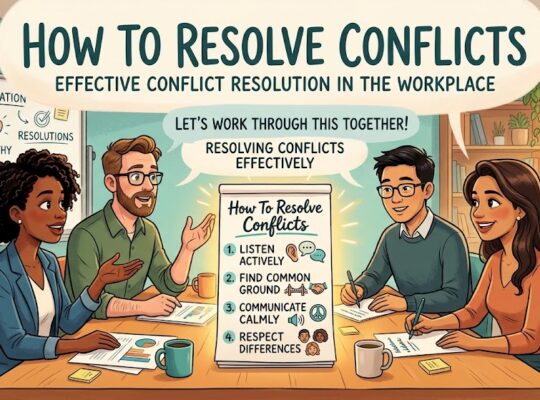
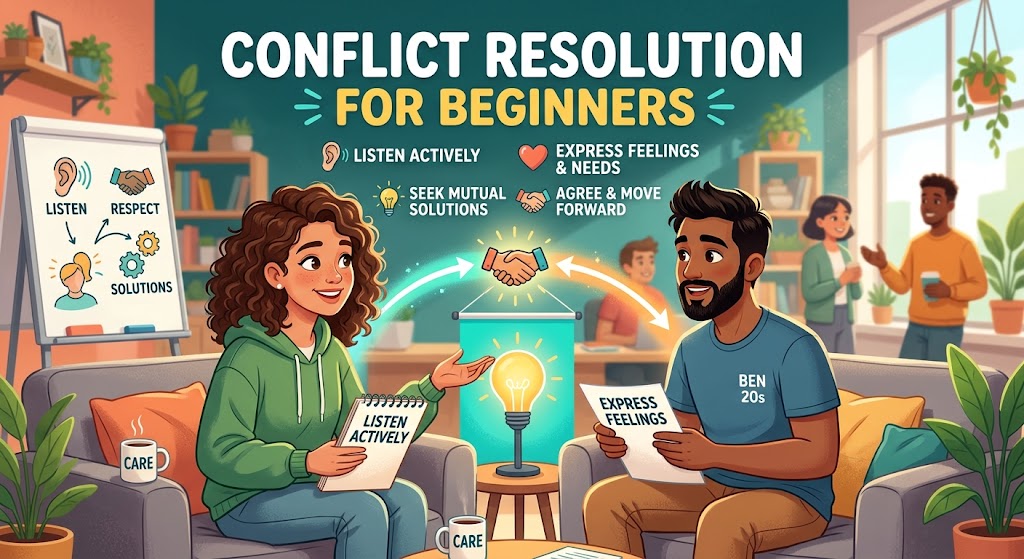
- Choose to engage – most people want to hide or ignore conflict.
- Listen more than speak.
- Clarify and respond – ensuring you understand by asking questions.
- Move the conversation toward resolving things.
Powerful Listening
Listen for content
Common Mistakes
- Make assumptions – focus on putting your assumption aside
- Judge – you miss crucial content when you make judgment
- Tune out – staying focused is the only way to understand their unique situation
“When people do not behave in the way I believe, it will be easy for me to judge them, and that can stop me from listening to them fully.”
Listening for values
What are your values? Listen for the values driving a conflict to find aligned solutions. Conflicts are often strongly based in your values.
Listening for feelings
Hiding your feelings gets in the way of resolving conflict. Develop a feelings vocabulary. Aim to hear what’s not being said.
Check for understanding
Listen for:
- What someone is saying
- How they feel about it
- The values driving the conflict
Listen to someone until they finish speaking. Put aside assumptions and repeat back what you heard. Ask them if they got it right?
Responding
Body language
At least 70% of all communication is nonverbal. Become hyper aware of your instinctual body language responses. Be aware of how others perceive your non-verbal communication. Don’t escalate conflict situations. Be aware of your signals in order to control them. Ask for feedback on your body language.
Responding vs. Reacting
Some common reactions are avoiding, yelling, or giving in too quickly. These actions often escalate a conflict and make it difficult for the other person to engage in a conversation. What are your common reactions when faced with conflict? Acknowledge that your reactions are driven by emotions and past experiences.
If you want to move from a reacting mindset to a responding mindset, you need to manage your emotions during conflict. Take a pause to identify your feelings. Think about why you are feeling this way. Remind yourself of your goal.
Assertive vs. Aggressive
“To be passive is to let others decide for you. To be aggressive is to decide for others. To be assertive is to decide for yourself.” – Edith Eva Eger (American Psychologist)
Distinction between assertive and aggressive
- Tone of voice
- Intention
- Inflection
- Choice of words
Aggressive Actions
- Speaking in a demanding tone
- Using words that indicate absolute power
- Emphasizing words to force or manipulate
“I need this report by the end of day, the client has been waiting a month for it” – this sentence can be said aggressively or assertively.
Watch for cultural stereotypes.
Compassionate vs. indifferent
To be compassionate, connect content to feelings. Reflect on a similar experience to develop a compassionate response. A compassionate response invites people into a conversation about their conflict.
Creating Conversation
Engage rather than avoid
“54% of employees believe managers could handle disputes more effectively by addressing underlying tensions immediately when they surface.” – Robyn Short (The Cost of Conflict in the Workplace)
If you haven’t equipped your team with conflict resolution skills, leaving them to “work it out” is avoidance. You must master engaging in conflict to be an effective leader.
Key phrases that might be helpful
- “What happened that you want to talk about?”
- “It sounds like we disagree, let’s talk about it.”
- “Having a conversation about this might be helpful.”
- “I’d really like to hear your point of view on this.”
- “How about we take the time to talk about this now?”
Keep them talking
Focus on getting to the heart of the problem.
Closed Questions
- Have one word answers
- Not as useful for gathering information
Open Questions
- Useful for gathering information
- Ask for description or explanations
- Open the door to more conversation
Getting to the heart of it
Guide them to talk about the main issues by asking specific, focused questions.
Examples of focused questions
- What is affecting you the most in this situation?
- What is keeping you up at night about this?
- What is hurting you the most?
- What is one thing you’d like to see happen to resolve this?
Summarizing using paraphrasing
Parrot phrasing
Repeat every word you say methodically and without emotion.
Paraphrasing
- Repeat back important points and feelings
- Lets them know they have been heard
Steps in paraphrasing
- The first step of paraphrasing is listening.
- Starting sentence
- “It sounds like…”
- “It seems like…”
- “What I heard is…”
- “What I understood you to say is…”
- “What I am hearing you say is…”
- “Let me see if I got this straight…”
- Repeat back the words and feelings important to the speaker.
- Check in directly
- “Did I get that right?”
- “Is that correct?”
Moving to Resolution
Brainstorming solutions
Encourage them to share what they want and need to resolve the conflict. Listen and list all the ideas. Encourage creativity to generate a variety of options. Start by practicing with yourself and reflecting on your own ideas
Testing solutions
Take advantage of the information you’ve gathered. Push through the initial feelings of judgment. Assess the ideas to see if they’ll be any good.
Test the ideas with questions
- How would this work?
- What will this do for you?
- Is it actually possible to do?
- What might be the limitations?
Getting to agreement
Honor the moment
- Setting a tone of calm and openness
- Take three cleansing breaths
- Acknowledge how loud the conversation has progressed
Find common ground
- Finding points of commonality
- Respecting each other’s ideas and opinions moves you closer to making an agreement.
Work out the kinks
- Helpful if you need a bit more give and take to resolve the conflict
- Be flexible and open that you will not get exactly what you want
Closing out the conversation
Acknowledge the accomplishments you’ve made. Summarize your agreements. Extend an open door invitation.
Dealing with Conflict in Action
Conflict during crisis
- Be prepared – level with yourself on the situation
- Embrace resistance – if you made things worse, take accountability
Chronic conflict
Escalated conflicts cost your relationships and your business.
- Listen to the issue
- Listen for their feelings
- Listen for their values
- Reflect back what you heard
Listen past statements that would derail the conversation. Practice your strategic listening and ask for feedback.
Passive aggressive conflict
“There is nothing passive about passive aggressive behavior.” – Charles F. Glassman, MD (American Doctor)
Passive Aggressive Behavior
- Indirect resistance to the demands of others
- Avoidance of direct confrontation
- Call out the behavior – without saying passive aggressive
- State the effect the behavior is having
- Follow-up with them – is that what you are trying to do?
- Problem-solve about how to resolve the behavior.
Expected conflict
Understand that resistance is normal. Check your reaction at what’s coming. Let people know you’ll give them a chance to disagree. Strengthen relationships all year-round. Deep breathing is the best offense and defense.
 | Remember! To experience the full benefit of this guide, I highly recommend you watch the full training session. |